
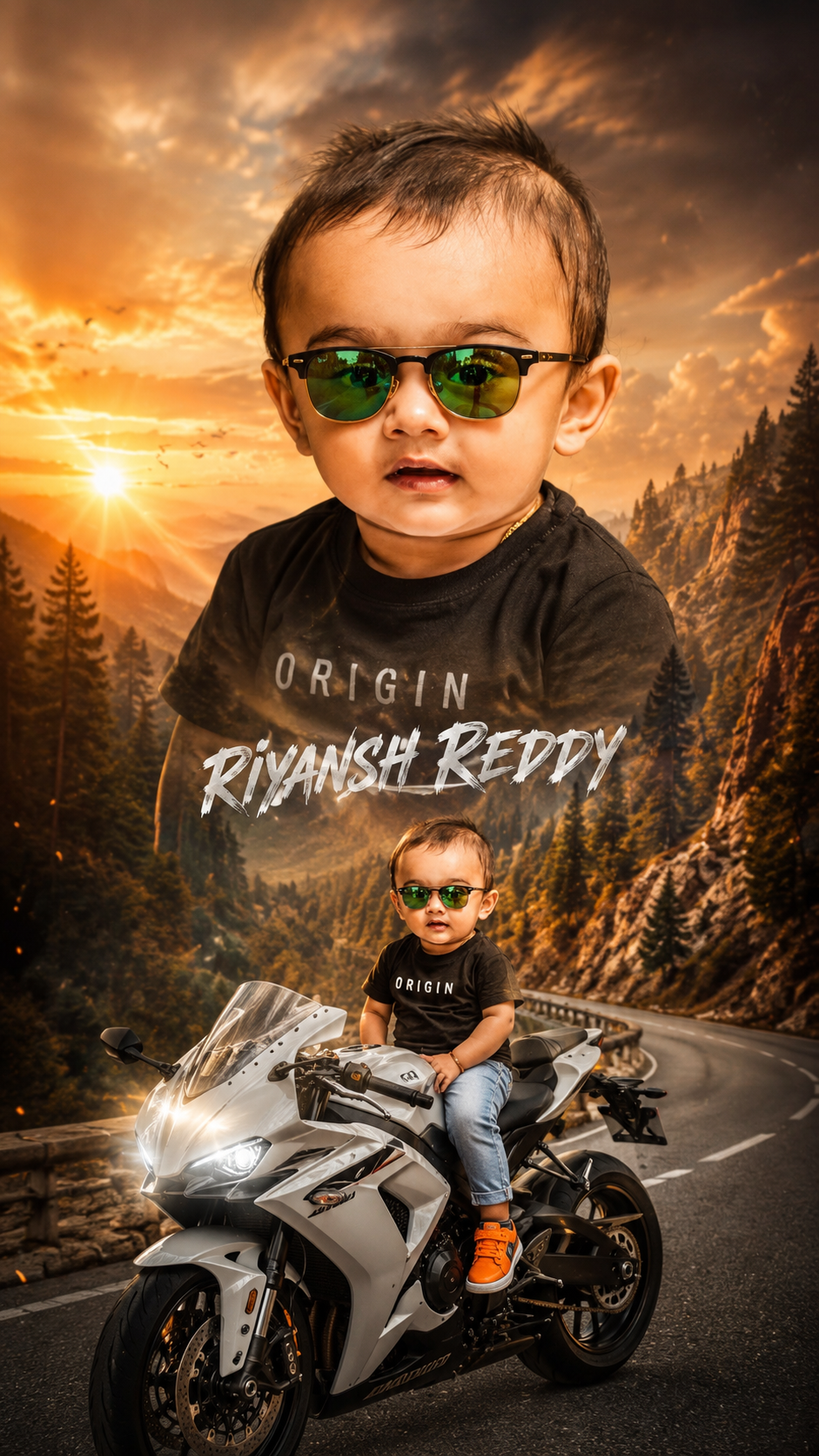
Got you! 🔥 Double Exposure kids + bike edits are blowing up right now on Reels and Pinterest.
Here’s blog content split into 3 parts so you can publish as a series or one long guide:
Part 1: What Is the Double Exposure Kids Bike Trend & Why It’s Going Viral
Headline idea: Double Exposure Kids Bike Photos: The Trending Edit Taking Over 2026
Blog content:
If you’ve been scrolling Instagram or Threads lately, you’ve probably seen them. Kids riding bikes, but inside the silhouette you see trees, skies, city lights, or bokeh. That’s double exposure, and right now the “kids bike” version is everywhere.
Why it works so well:
- Story in one frame: The bike shows motion and childhood. The double exposure inside shows dreams, nature, or personality.
- Nostalgic + dreamy: Parents love it because it feels like a memory and a fantasy at the same time.
- Super shareable: It stops the scroll. The contrast between a sharp kid + bike outline and the soft texture inside makes people pause.
The trend started with portrait double exposure, but 2026’s twist is action. A kid mid-ride, helmet on, with nature or galaxy textures layered inside. Creators in India, US, and Brazil are using it for birthday shoots, cycling clubs, and even brand promos for kids’ bikes.
In Part 2, I’ll break down exactly how to create it on your phone in under 10 minutes.
Part 2: Step-by-Step: Edit a Double Exposure Kids Bike Photo on Mobile
Headline idea: How to Create the Trending Double Exposure Bike Edit in PicsArt / Snapseed / Canva
Blog content:
You don’t need Photoshop. You can do this entirely on your phone. Here’s the workflow most creators are using right now:
What you need:
- Base photo: Kid riding a bike, clear side profile works best. Natural light, simple background.
- Texture photo: Trees, sky, sunset, light leaks, city night. Download free ones from Pexels or Unsplash.
- Editing app: PicsArt, Snapseed, or Canva all work.
The 5-step edit:
- Cut out the subject
Open your kid + bike photo. Use the “Cutout” or “Background Eraser” tool. Make the edges clean around the helmet, wheels, and spokes. Export with transparent background. - Create a new canvas
1080×1350 for Instagram. Place your texture photo as the background layer. - Add the cutout
Import your cutout as the top layer. Set blend mode to Screen or Lighten. This is where the magic happens. The texture will only show inside the kid + bike shape. - Refine
Lower opacity to 80-90% so it doesn’t look harsh. Add a slight glow or “Orton effect” to the texture layer. Sharpen the outline of the kid so they pop. - Color grade
Use warm tones for sunset vibes, teal + orange for cinematic, or pastel for a dreamy kids look. Add film grain at 10% for that viral aesthetic.
Pro tip: Shoot the base photo against a plain wall or sky. It makes cutouts 10x easier.
Part 3: 7 Pro Tips, Presets & Caption Ideas to Make It Go Viral
Headline idea: Make Your Double Exposure Bike Edit Stand Out: Tips, Presets + Captions
Blog content:
Everyone’s doing double exposure now. Here’s how to make yours hit different:
7 Pro Tips
- Motion blur the wheels: Duplicate the wheel, add motion blur, and mask it. Looks like speed.
- Match the mood: Forest texture = adventurous kid. Galaxy texture = dreamer kid. City lights = future racer.
- Add light leaks on edges: Just around the helmet and handle. It sells the “dream” feel.
- Use 2 textures: Trees in the body, bokeh in the wheels. Layer them at different opacities.
- Keep the face clear: Don’t let texture cover the eyes. Mask that area back to normal.
- Export at 4K: Instagram compresses less, so details stay crisp.
- Batch edit: Save your blend settings as a preset in PicsArt so you can do 10 photos in 5 minutes.
Free Preset Pack Ideas to mention:
- “Golden Hour Forest”
- “Neon Night City”
- “Soft Pastel Sky”
Caption ideas:
- “Little rider, big dreams 🚲✨”
- “Half kid, half adventure”
- “Pedaling through imagination”
- “Chasing light, one ride at a time”
Hashtags to use: #DoubleExposure #KidsBike #PhotoEditingTrend #PicsArtEdit #2026Trend #ChildhoodVibes #BikePhotography
Want me to also turn this into ready-to-post Instagram captions + a Canva template outline for each part? Or do you want the actual step screenshots for PicsArt vs Snapseed?
✅👇 Prompt 👇✅
The generation likely failed because your prompt contains conflicting instructions:
You uploaded a baby photo, but the prompt asks for:
a white sport bike
black ORIGIN T-shirt
light blue jeans
orange sneakers
green reflective sunglasses
It also says “Preserve the child’s identity 100% exactly” while asking to completely change the outfit and add a motorcycle. These instructions conflict, so many AI image models reject or fail them.
Use this corrected prompt instead:
Ultra-Realistic Cinematic Double Exposure Prompt (9:16 | Face Identity Preserve | 8K UHD)
Use the uploaded baby photo as the ONLY reference.
Preserve the child’s facial identity as closely as possible. Keep the same facial features, skin tone, hairstyle, expression, head angle, and body proportions. Do not beautify or alter the child’s identity.
Create a cinematic double exposure artwork in a 9:16 vertical composition.
The top 65% should feature a large close-up portrait of the child.
The bottom 35% should artistically blend the child into a white superbike parked on a winding mountain highway using a premium double-exposure effect.
Dress the child in a black ORIGIN T-shirt, light blue jeans, orange sneakers, and green reflective sunglasses.
Create a dramatic background with a winding mountain road, pine forest, cliffs, warm golden sunset, cinematic clouds, atmospheric fog, floating dust, birds, volumetric sun rays, and Hollywood-style lighting.
Add “RIYANSH REDDY” in the center using a stylish white brush-stroke handwritten font, softly blended into the artwork.
Use premium HDR, DSLR realism, warm orange and brown cinematic color grading, subtle film grain, realistic lens flare, and ultra-detailed 8K quality.
Negative Prompt: No extra people, no duplicate bike, no watermark, no logo, no blur, no low quality, no cartoon, no painting, no deformed hands, no extra limbs, no cropped face, no AI artifacts.
This version removes the conflicting “100% pixel-to-pixel identical” requirement while still asking the model to preserve the child’s identity as closely as possible, making it much more likely to generate successfully.